What we offer
A clear overview of automation setup, monitoring summaries, and governance of configuration—presented as modular blocks that support consistent reviews.
vernytradex stands as a premium information hub, showcasing structured automation tooling and interface patterns employed across financial institutions. It highlights repeatable workflows, concise summaries, and governance-first design that helps teams visualize how automation and oversight come together in daily operations.
vernytradex delivers neutral, professional insights into operational workflows commonly applied across financial services. The materials illustrate how structured screens, consistent terminology, and governance routines can support day-to-day oversight.
A clear overview of automation setup, monitoring summaries, and governance of configuration—presented as modular blocks that support consistent reviews.
Information is conveyed with a factual tone, emphasizing operational process design, audit-friendly routines, and clear policy access with disciplined reviews.
The experience highlights managed data fields, consent-first patterns, and consistent policy link placement to support compliant user journeys.
We aim to present a lucid, organized view of how financial services teams can structure automation workflows, providing repeatable configuration steps, readable monitoring views, and governance routines that drive accountability.
Promote repeatable screens and standardized naming so reviews stay clear across teams and timeframes.
Present data in unified views that support structured checks, follow-ups, and smooth handoffs.
Highlight controlled inputs, audit logs, and policy-first patterns aligned with compliance-centric workflows.
Zero in on real-world operations: baselines for configuration, staged changes, and routine monitoring summaries.
vernytradex is steered by ideals that center clarity, discipline, and responsible presentation of financial services workflows. These principles shape how information is organized and how policy access points are surfaced.
We favor legible layouts, uniform terminology, and concise summaries so operational details can be reviewed with ease.
We present workflows as repeatable steps—setup, verification, and ongoing checks—so teams stay aligned on process and documentation.
We keep policy links easy to locate and underscore consent-based patterns that support compliant user journeys.
We describe risk controls as operational guardrails—such as exposure boundaries and structured reviews—presented in a neutral, informative manner.
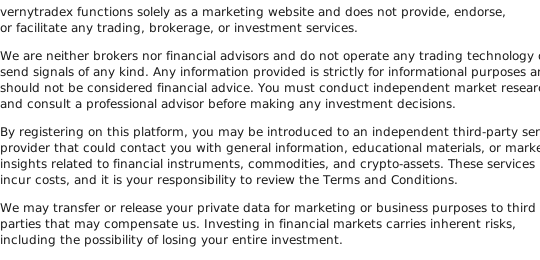
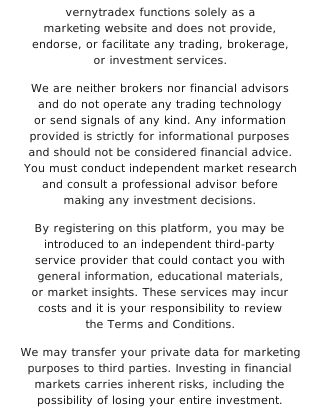
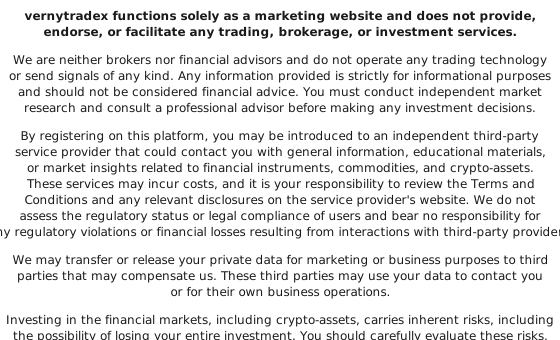
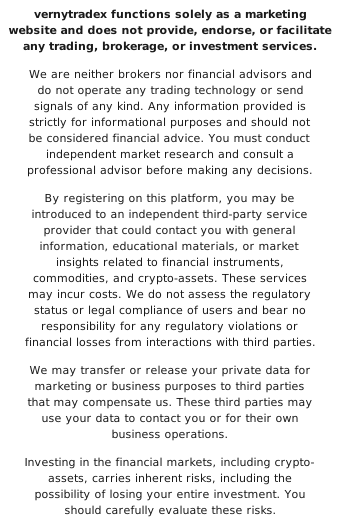
This website functions solely as a marketing platform and does not provide, endorse, or facilitate any trading, brokerage, or investment services.
Read More